
Please Choose Your Language


Views: 0 Author: Site Editor Publish Time: 2026-07-07 Origin: Site


Choosing WPC Decking usually removes staining, sealing, and regular sanding from the maintenance list, but it does not eliminate everyday care. Leaves, mud, barbecue grease, water spots, and shaded damp areas can still create problems, especially when debris collects in surface textures or drainage gaps.
The real question is not whether the deck needs cleaning, but how to clean it without damaging the finish. Gentle washing, prompt spill removal, and a soft-bristle brush are common starting points, while pressure washing and stronger chemicals depend on the specific product. You will learn what to try, what to avoid, and when to escalate.
Normal care is mainly preventive cleaning rather than repeated surface restoration. Owners need to remove loose debris, deal with fresh spills, wash visible dirt from textured areas, clear drainage gaps, and watch for physical changes in the installed boards. These tasks are usually simpler than maintaining timber because regular staining, oiling, sealing, and sanding are not normally part of composite deck cleaning. A cosmetic mark should not automatically be treated with a repair method intended for natural wood.
The safest response follows a simple order. Remove surface debris first, begin with water and a compatible mild cleaner, add a soft-bristle brush only when needed, and test unfamiliar products on a concealed section. Let the cleaned area dry before deciding that a mark is permanent or applying a stronger treatment. Product-specific instructions should take priority because approved brushes, chemical cleaners, pressure-washing methods, and cosmetic repair procedures vary among composite materials.
Maintenance problems are easier to manage when they are grouped by the safest first response. Dry debris, oily contamination, biological growth, and physical damage should not all receive the same treatment. Starting with the mildest suitable method reduces the risk of turning a removable mark into permanent surface damage.
Dust, pollen, dry soil, grass clippings, and fallen leaves should normally be swept away or removed with a gentle rinse. Loose grit needs to come off before brushing because particles dragged across an embossed pattern may leave visible scuffs. Extra attention is useful around planters, entrances, steps, and furniture legs, where dirt tends to gather. Wet leaves should also be removed before they become compressed into the wood-grain recesses.
Mud is usually easier to handle after the heaviest material has been lifted or loosened. Rinse away free soil, apply a compatible mild cleaner if residue remains, and brush gently in the direction of the surface pattern. Avoid attacking dried mud with a metal scraper or abrasive pad. After rinsing, allow the boards to dry before judging the result, since wet areas often appear darker than the surrounding surface.
Water spots require a different diagnosis even though they may resemble ordinary dirt. Rain, irrigation, or pool water can leave mineral residue after evaporation, particularly where water repeatedly dries in the same place. A clean-water rinse may remove light deposits, but recurring spots can indicate a hard-water source rather than a defect in the decking. Strong acid treatment should not be the first response because formulas that are acceptable for one composite surface may lighten or alter another.
Food, sauces, drinks, cooking oil, barbecue grease, and sunscreen are most manageable when treated quickly. Lift solid material without spreading it, blot liquids with an absorbent cloth, and then clean the affected area with a mild product-compatible solution. A soft-bristle brush can help lift residue from a 3D wood-grain pattern, but heavy pressure is rarely necessary. Thorough rinsing matters because dried cleaner can leave a film that attracts more dirt.
Oil and grease may require a cleaner with greater degreasing ability than water alone. Even then, the product should be identified as suitable for the particular type of WPC Decking and tested on an inconspicuous area. Avoid mixing cleaning agents or improvising concentrations, especially with solvents, bleach, acids, or alkaline products. An aggressive chemical may remove the stain while also changing the sheen, color, or texture around it.
Stop cleaning if the affected area becomes lighter, duller, sticky, or soft. Supplier advice is also appropriate when contamination has entered a deep gouge, exposed edge, or damaged cap layer. Established stains may respond differently from fresh spills, so repeated hard scrubbing is not a reliable substitute for prompt treatment. Spills should be removed quickly with material-compatible cleaners rather than treated with unapproved solvents.
Mold, mildew, algae, and green biofilm are often associated with moisture, but the visible growth may be feeding on pollen, dirt, leaves, or other organic material resting on the surface. Shaded corners, poorly ventilated areas, blocked drainage gaps, and locations beneath roof or irrigation runoff remain wet for longer periods. Poolside boards may face similar conditions when splashed water combines with dust and organic residue. Cleaning the visible mark without removing its food and moisture sources often leads to rapid regrowth.
Begin by clearing leaves, pollen, and loose dirt. Wash the area gently with a compatible cleaner and use a soft-bristle brush where the film has settled into the grain. Rinse thoroughly, clear nearby drainage gaps, and observe how quickly the location dries. Improving airflow or redirecting repeated runoff may have a greater long-term effect than applying a stronger chemical.
Recurring growth in the same place deserves closer inspection. Standing water may be caused by compacted debris, an obstructed edge, an irrigation leak, or an installation slope that does not move water away effectively. Do not assume chlorine bleach, vinegar, acid, or a general-purpose mold remover is safe for every composite surface. Pollen and dirt can support surface growth, so both the visible biofilm and its underlying food source need to be removed.
Light scuffs should be distinguished from deep scratches, cracks, delamination, or gouges that expose the internal core. A small cosmetic mark does not always need active repair, and some marks become less noticeable after ordinary weathering. Sandpaper, heat guns, paint, filler, and surface sealers should not be used automatically. On co-extruded WPC Decking, sanding can remove part of the protective layer, flatten the embossed grain, and leave a permanently different patch.
Snow can normally be removed with a non-sharp plastic tool or soft outdoor broom. Push carefully along the board direction where practical, and avoid metal-edged shovels, ice picks, or forceful chopping. De-icing products also require confirmation because residue can react differently with various surfaces and nearby fasteners. Once conditions improve, remove remaining granules and inspect the deck after thawing.
Pressure washing is another product-dependent method rather than a universal maintenance step. Some composite materials permit controlled pressure cleaning, while others may be damaged by the same process. Never use a concentrated jet at close range or rely on pressure to cut through a stubborn stain. A hose, mild cleaner, and soft-bristle brush remain the safer first response unless the supplier specifically approves another method.
Maintenance Problem | Safe First Response | What to Avoid | When to Escalate |
Dust, leaves, and pollen | Sweep or gently rinse away loose debris | Scrubbing grit into the grain | Debris repeatedly packs into inaccessible gaps |
Mud and tracked soil | Loosen, rinse, and use a compatible mild cleaner | Metal scraping or abrasive powder | Marks remain after the surface dries |
Food and drink | Remove solids, blot liquids, wash promptly, and rinse | Letting residue dry or applying solvent immediately | The surface finish changes during cleaning |
Oil and grease | Blot and use an approved mild degreasing cleaner | Untested industrial degreasers | Repeated gentle treatment has no effect |
Water spots | Rinse, dry, and identify possible mineral residue | Repeated acid cleaning without approval | Deposits recur after every rinse |
Mold or green film | Remove debris, clean gently, and check moisture conditions | Treating the mark while ignoring drainage | Growth quickly returns in the same location |
Light scratches | Clean and inspect before attempting repair | Sandpaper, heat, filler, or paint without guidance | The outer layer or core is exposed |
Snow and ice | Use a non-sharp tool and verify de-icer compatibility | Metal shovels, ice picks, or abrasive traction material | Removal requires damaging force |
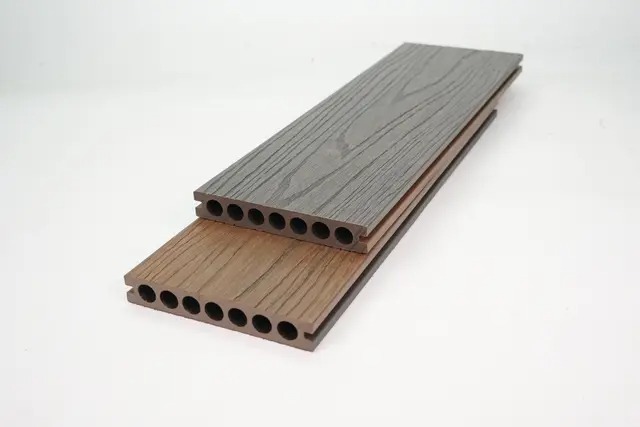
EcoTechWood offers WPC Decking with co-extruded protective surfaces, reversible color faces, hollow profiles, and 3D wood-grain embossing for residential, outdoor, commercial, garden, and poolside use.
A co-extruded board has an outer layer that should be preserved rather than intentionally abraded. Reversible boards may also have different colors or surface treatments on each face, so care should follow the installed side instead of assuming both faces behave identically. Deep embossing can trap fine soil, pollen, food particles, and soap residue within recessed lines. A soft-bristle brush worked along the grain is generally safer than a harder tool used across raised details.
Hollow construction does not fundamentally change normal top-surface cleaning. However, exposed ends, board edges, and surrounding channels should not become packed with soil or organic matter. Pool areas need closer attention to mineral marks and slippery biofilm, while shaded garden decks require regular removal of damp leaves. Commercial walkways may collect abrasive grit more quickly and therefore benefit from early sweeping before washing.
Drainage gaps are part of the maintenance system because they allow rainwater and cleaning residue to leave the installed surface. Compacted leaves or soil can slow that movement and keep adjacent areas damp. Repeated pooling in one fixed location may point to slope, support, or installation problems rather than insufficient cleaning. Washing can remove residue that makes a board look dull, but it cannot reverse genuine weathering or restore a surface already damaged by abrasion.
Seasonal Checks That Matter:
● After prolonged rain or at the start of spring: Clear accumulated leaves, soil, and organic debris. Inspect shaded areas for mold, mildew, algae, or slippery film, then confirm that drainage gaps and runoff paths remain open. Rinse a small section and observe whether water leaves the surface or stays in isolated pools.
● During frequent outdoor use: Clean food, drinks, sunscreen, and grease promptly. Examine areas around grills, dining furniture, planters, entrances, and steps, where contamination or grit is more likely. Place suitable protective pads beneath heavy items and lift furniture rather than dragging it.
● During leaf fall or humid weather: Prevent wet leaves from forming compressed layers over the grain or between boards. Check corners, edges, and spaces beneath movable objects. Look for gutters, sprinklers, or nearby landscaping that repeatedly directs water onto the same area.
● During snow and freezing conditions: Remove loose snow before it becomes heavily compacted when practical. Use non-sharp tools, verify de-icer compatibility, and avoid chopping bonded ice from the surface. After thawing, clear residue and inspect gaps, fasteners, and any area that remains wet.
DIY cleaning should stop when the treatment itself begins to change the sheen, texture, or color of the board. Supplier or installer review is also appropriate when a scratch penetrates the outer layer, the surface lifts or blisters, or the boards crack, warp, sag, move, or feel unstable. Persistent standing water and gaps that cannot be cleared without removing boards may indicate an installation issue. Biological growth that returns soon after cleaning and drying can point to unresolved moisture rather than an ineffective detergent.
Document the condition before attempting another method. Photograph the area when wet and dry, record the cleaner and tools already used, and note recent rain, irrigation, snow, or drainage behavior. Where possible, identify the board model, profile, exposed face, installation date, and location. This information helps Zhejiang Kunhong New Material Co., Ltd., or the installer distinguish removable contamination from cap-layer damage, drainage failure, or structural movement.
Good WPC Decking care comes down to early action and restraint: remove debris before it traps moisture, clean spills promptly, use mild methods, and keep drainage gaps open. Strong chemicals, abrasive tools, and uncontrolled pressure washing can create more damage than the original stain.
Zhejiang Kunhong New Material Co., Ltd. offers WPC decking for outdoor, garden, commercial, and poolside applications, including co-extruded and textured options. Choosing the right surface and following product-specific care instructions can reduce cleaning difficulty, protect the finish, and help owners manage long-term maintenance with fewer avoidable problems.


