
Please Choose Your Language


Views: 0 Author: Site Editor Publish Time: 2026-11-20 Origin: Site


Building or replacing a deck represents a multi-decade structural investment. Exterior decking materials face relentless UV radiation, freeze-thaw cycles, heavy foot traffic, and constant moisture. When these materials fail prematurely, you face a labor-intensive tear-down and massive replacement efforts. Buyers struggle to cut through marketing noise. Terms like "maintenance-free" and "scratch-proof" flood the market, making it hard to separate superficial sales pitches from actual physical tolerances. Picking the wrong board profile or capping technology for your climate leads to warping, delamination, or severe fading in just a few years. This guide delivers an objective, technical framework for evaluating board anatomy, manufacturing standards, aesthetic realism, and warranty realities. We will help you ensure the selected material meets your specific environmental and load-bearing requirements.
A board's lifespan depends on the inner core and outer shell working together. You cannot evaluate one without the other. High-density cores give rigidity and fastener-holding power. The outer shield blocks environmental damage. If either component fails, the entire board fails.
The interior composition dictates weight, thermal stability, and structural limits. Wood-Plastic Composite (WPC) cores blend recycled wood fibers with high-density polyethylene (HDPE). This mix offers excellent rigidity and thermal stability, preventing excessive expansion under direct sunlight. Wood fibers provide tensile strength, while the plastic encapsulates the fibers to resist moisture.
Mineral-added cores introduce crushed minerals into the plastic matrix. This increases overall strength and reduces thermal expansion, but makes the boards slightly more brittle and harder to cut on site. Fully synthetic polymer (PVC) cores contain no organic material. They are exceptionally lightweight and boast the highest resistance to moisture absorption, making them ideal for marine environments. PVC cores have a higher heat retention rate and expand significantly more than WPC cores during extreme temperature fluctuations, demanding meticulous attention to expansion gaps during installation.
The protective shell acts as the frontline defense against the elements. The chemical composition of this layer is typically a proprietary blend of polyethylene or polyurethane. Polyethylene caps offer excellent flexibility and impact resistance. Polyurethane caps provide a harder surface that excels in scratch resistance.
Manufacturers blend advanced UV inhibitors and antioxidants directly into the shell material to ensure long-term color stability. UV inhibitors act like sunscreen for the board, preventing polymer chains from breaking down and causing the surface to chalk. Antioxidants prevent the chemical degradation of the plastics when exposed to atmospheric oxygen and pollutants. High-quality Composite Decking Surface Protection maintains its structural and visual integrity for decades without requiring secondary sealants.
Modern boards utilize a simultaneous extrusion process. Instead of applying a protective coating after the core forms, the core and the cap extrude together through a single die at temperatures exceeding 350°F. This high-heat fusion creates an inseparable bond between the two layers.
This method of creating Co-extruded Composite Decking entirely eliminates the risk of delamination—the catastrophic failure where the protective shell peels away from the core. First-generation boards relied on post-manufacture coating methods that frequently failed under the stress of freeze-thaw cycles. Co-extrusion ensures the board expands and contracts as a single, unified structural element.
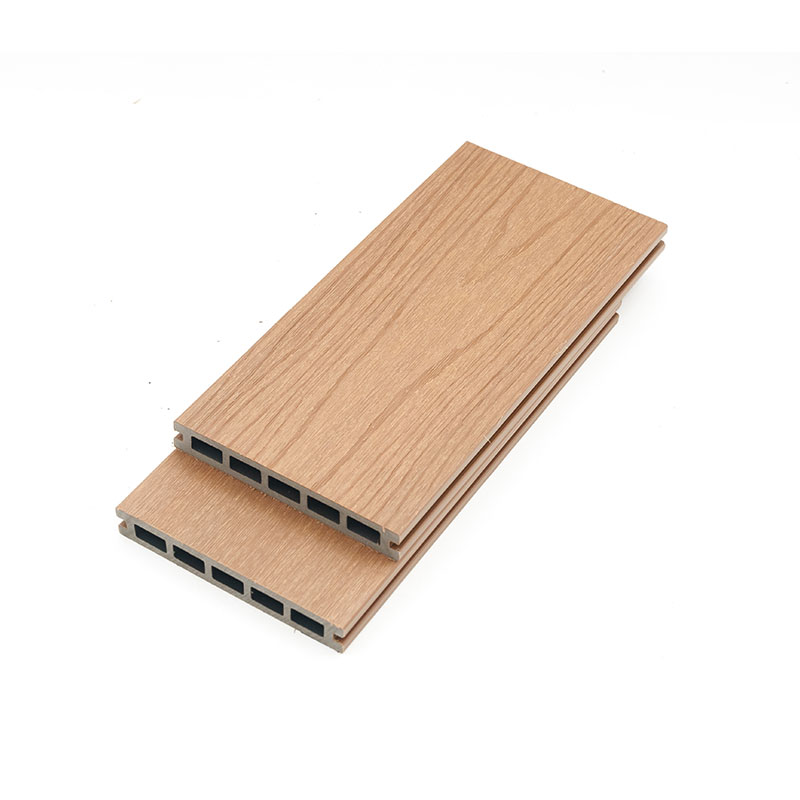
You must evaluate the physical dimensions and profiles of the boards. These structural choices directly impact the installation process, the required substructure, and the long-term performance of the deck.
The extent to which the protective shell wraps around the core is a primary specification. A 4-sided capped board features the polymer shell on the top, bottom, and both grooved sides. This completely seals the organic core material from environmental exposure. For ground-level decks, installations over concrete pads, or areas with poor cross-ventilation, 4-sided capping prevents moisture vapor from migrating upward from the soil and penetrating the bottom of the board.
3-sided capped boards leave the bottom surface exposed. This design allows the inner core to breathe, which benefits highly elevated, well-ventilated deck designs. It reduces manufacturing costs, making 3-sided boards a popular budget-friendly option. The exposed bottom groove makes the core vulnerable to vapor absorption if installed too close to damp ground, leading to upward cupping over time.
The cross-sectional profile determines weight, rigidity, and acoustic properties. Solid boards are manufactured as dense, rectangular planks. They closely mimic the weight and feel of traditional hardwood. Solid profiles offer superior sound dampening—reducing the hollow sound when walked upon—and provide higher impact resistance for high-traffic commercial spaces or premium residential applications. They allow for complex custom cuts, such as routing edges for stair treads or picture-framing.
Scalloped boards feature grooved channels running along the bottom surface. This engineered profile removes excess material from the core, significantly reducing the overall weight and lowering the price point. While scalloped boards optimize budgets, the reduction in mass means they lack the absolute structural rigidity of solid boards. They are more susceptible to deflection under heavy loads and require stricter joist spacing to prevent sagging.
| Feature | Solid Profile Boards | Scalloped Profile Boards |
|---|---|---|
| Structural Rigidity | Maximum rigidity; minimal deflection under load. | Moderate rigidity; higher risk of deflection if joists are spaced too far apart. |
| Weight | Heavy; closely mimics the mass of natural hardwood. | Lightweight; easier to handle and transport during installation. |
| Acoustics | Excellent sound dampening; solid footfall sound. | Can produce a slightly hollow sound depending on fastener tension. |
| Custom Cutting | Edges can be routed or ripped cleanly for custom borders. | Exposed channels make ripped edges visually unappealing; requires fascia boards. |
When evaluating samples, check the frequency of pattern repeats in the wood grain embossing. Lower-end boards use small embossing rollers, resulting in an obvious, repeating grain pattern every few feet that creates a cheap, manufactured look across a large deck surface. Premium boards utilize large-diameter rollers to create long, non-repeating grain structures.
Evaluate the color variegation techniques. Natural hardwood features dynamic streaking, tonal variations, and depth. High-quality composites achieve this by blending multiple pigment streams during the extrusion process, creating boards where no two planks look exactly identical. Avoid boards with flat, monochromatic coloring or printed streaks that look pixelated upon close inspection.
Physical texture serves both aesthetic and functional purposes. Deep embossing creates a highly realistic wood feel and does an excellent job of hiding minor surface scratches. Overly deep grooves can trap dirt, pollen, and organic debris, requiring more frequent scrubbing to keep the deck clean.
Slip resistance is a major safety metric for decks surrounding pools or located in rainy climates. Test sample boards wet and dry. Look for the Coefficient of Friction (COF) ratings provided by the manufacturer. A higher COF indicates better grip. For commercial applications or ADA compliance, the Capped Composite Decking surface must meet specific dynamic friction thresholds to ensure wet-weather safety.
Evaluating composite decking requires looking past the initial price tag. The true cost of a deck is calculated over its entire lifespan, factoring in maintenance, repair, and replacement cycles.
High-quality Capped Composite Decking Boards carry a premium upfront cost compared to pressure-treated lumber. This initial investment is rapidly offset by the elimination of ongoing maintenance. Traditional wood decks require bi-annual power washing, sanding, and the application of expensive stains or sealants. Over a 10-to-15-year period, the cumulative cost of these maintenance materials—coupled with the inevitable replacement of warped or rotted wood planks—far exceeds the initial premium paid for composite materials. The ROI of composite decking is realized through zero-maintenance weekends and decades of structural stability.
Your specific lifestyle and intended use cases dictate the type of board you select. If your deck design includes a heavy outdoor kitchen, a stone fire pit, or a large hot tub, the sheer weight of these amenities necessitates a solid core board to prevent localized crushing or deflection. If you have large pets with heavy claws, or if you frequently move cast-iron patio furniture, you must prioritize a board with a polyurethane-based cap known for maximum scratch resistance. Matching the board's physical tolerances to your daily lifestyle prevents premature surface damage.
All building materials move with temperature changes, but plastics move more than wood. WPC Co-extrusion Decking expands when exposed to hot afternoon sun and contracts during cold nights. Understanding this thermal movement dictates a successful installation.
Manufacturers provide specific expansion gap metrics based on the ambient temperature during installation. A gap of 3/16 inch to 1/4 inch is required at the butt joints where two board ends meet. Failing to account for this expansion causes the boards to push against each other as they heat up, leading to severe buckling, warped framing, and sheared fasteners.
Dense, dark-colored composite boards retain significant solar heat. In direct summer sunlight, dark brown or slate gray composite boards become uncomfortably hot to the touch, posing a risk to bare feet and pet paws. If you live in a hot Southern climate with a deck exposed to full afternoon sun, heat retention must be a primary evaluation criterion. Opt for lighter pigments like ash gray, sand, or light cedar. Seek out manufacturers that incorporate advanced cool-deck technologies, which use specialized reflective pigments in the cap to reduce heat absorption by up to 35% compared to standard boards.
Do not rely on qualitative marketing terms like "highly durable" or "stain-proof." Guide your purchasing decision using standardized testing metrics. Look for ASTM (American Society for Testing and Materials) testing standards. Abrasion resistance tests measure how much material is worn away under friction, providing a quantifiable metric for scratch resistance. Water absorption tests measure the percentage of weight gained when a board is submerged. A high-quality capped composite exhibits near-zero water absorption, ensuring it will not swell, rot, or host mold growth inside the core.
The quality of the decking board is directly tied to the operational standards of the company producing it. Vetting the manufacturer is just as important as inspecting the physical board samples.
A reputable Composite Decking Manufacturer operates with complete supply chain transparency. High-quality boards utilize post-consumer recycled plastics and FSC-certified wood fibers. This commitment to sustainable sourcing ensures strict batch-to-batch consistency. Manufacturers that rely on cheap, unsorted industrial plastic waste struggle with quality control, resulting in boards that vary wildly in density, color, and thermal stability from one pallet to the next.
Warranty documents are legal contracts. You must read the fine print to understand what is actually covered. Differentiate between the structural warranty, which covers rot, splintering, fungal decay, and catastrophic structural failure, and the fade/stain warranty, which covers excessive color loss and permanent staining from food or organic debris.
Pay critical attention to the proration schedule. A 25-year warranty sounds impressive, but if the coverage drops to 20% of the board's value after year 10, your financial protection is minimal. Almost all decking warranties cover materials only. If a board fails due to a manufacturing defect, the company will provide a replacement board, but they will not cover the exorbitant labor costs required to remove the old board and install the new one.
Look for manufacturers that subject their products to rigorous independent scrutiny. ISO 9001 certifications indicate that the company maintains strict, standardized quality management systems in their factories. Seek out independent third-party testing reports, such as ICC-ES (International Code Council Evaluation Service) evaluation reports. These documents verify that the manufacturer's claims regarding structural load capacity, span ratings, and fire resistance have been independently tested and meet stringent international building codes.
Even the highest-quality capped composite boards will fail if installed incorrectly. The installation environment and the methods used to secure the boards dictate the ultimate success of the project.
A common and disastrous mistake is installing premium composite boards over an old, failing wood substructure. Composite decking is significantly heavier than dry cedar or pine. Replacing old wood boards with heavier composite requires a thorough, professional inspection of the existing joists, beams, and ledger board connections. Any signs of rot, structural deflection, or inadequate load-bearing capacity must be addressed. Placing a 50-year deck board on a 10-year framing structure guarantees premature deck failure. We highly recommend applying butyl joist tape over the top of all framing members before laying the composite boards to protect the wood from moisture runoff.
The choice of fastening system impacts both aesthetics and structural performance. Hidden fastener systems use clips that slot into the grooved edges of the boards. This provides a clean, screw-free aesthetic and allows the boards to expand and contract naturally along the clip track without shearing the screws.
Color-matched face screws are driven directly through the top of the board into the joist. Face screwing provides higher hold-down strength and structural rigidity, which is vital for stair treads and perimeter boards. Driving a screw through the board permanently punctures the protective cap. You must use specialized composite screws designed with reverse threads near the head to pull the displaced polymer back down, preventing unsightly mushrooming around the screw hole. For marine environments, always upgrade to 316 stainless steel fasteners to prevent corrosion.
Standard wood decks are typically framed with joists spaced 16 inches on-center. While many solid composite boards accommodate this spacing, certain scalloped profiles or thinner composite boards require 12-inch on-center spacing to prevent deflection and sagging. If you plan to install the decking at a 45-degree diagonal angle, the joist spacing must almost always be reduced to 12 inches on-center to support the increased span between joists. This requirement increases the amount of framing lumber needed, thereby increasing substructure costs.
Moisture management underneath the deck is just as critical as surface protection. Manufacturers enforce strict requirements for cross-ventilation and minimum ground clearance—typically ranging from 1.5 to 6 inches, depending on the board profile and capping type. Adequate airflow dries out the soil beneath the deck and prevents moisture vapor from becoming trapped against the bottom of the boards. Failing to provide adequate ventilation causes the boards to absorb moisture from the underside, leading to severe cupping, warping, and the immediate voiding of the manufacturer's warranty.
Selecting the right decking material requires matching board anatomy to your specific site conditions. You must balance core density, cap durability, and substructure requirements to ensure a successful installation.
A: Capped boards feature a co-extruded polymer shell for superior stain and fade resistance, whereas uncapped boards expose the wood-plastic core to the elements, leading to faster degradation.
A: Expect a realistic lifespan of 25 to 50 years. This longevity is entirely contingent upon proper joist spacing, adequate under-deck ventilation, and strict adherence to the manufacturer's installation guidelines.
A: While the polymer cap is highly water-resistant, the exposed cut ends and the core of 3-sided boards can absorb trace amounts of moisture. It is water-resistant, not entirely waterproof.
A: Standard woodworking tools work well. We recommend using carbide-tipped blades with fewer teeth to prevent melting the polymer cap during cuts and leaving a jagged edge.
A: Most manufacturers permit power washing only at low PSI under 1500 with a broad fan tip. Exceeding this pressure can slice the surface protection and instantly void the warranty.
A: Early-generation composites faded severely. Modern capped composites experience a minimal, expected weathering fade of 1-2% in the first few months before stabilizing permanently.


